
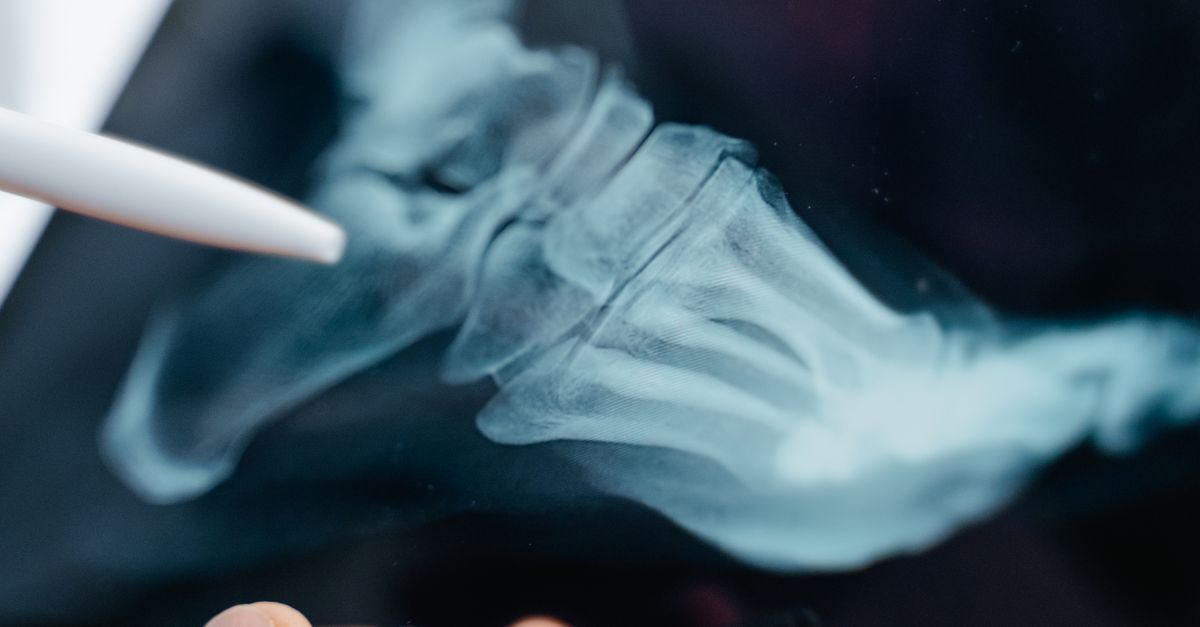
It often starts as something easy to dismiss: a dull ache on top of your foot after a long walk, a tender spot that eases with rest and returns the moment you lace up your shoes. Many people assume it is a minor strain and keep going. But that nagging pain may be a stress fracture, a tiny crack in a bone that can grow worse if it is ignored. Recognizing it early can make recovery simpler and shorter.
What Is a Stress Fracture?
A stress fracture is a small crack or severe bruise within a bone. Unlike a break from a fall or twist, it develops gradually from repetitive force. Bone is living tissue that constantly remodels itself in response to load. When the stress placed on a bone outpaces its ability to repair, microscopic damage accumulates until a crack forms.
In the foot, the most common sites are the metatarsals, the long bones leading to the toes (especially the second and third), as well as the heel bone, the navicular bone on the arch side, and the bones of the ankle.
Early Signs to Watch For
Stress fractures rarely announce themselves dramatically. Common early signs include:
- Pain that builds during activity and improves with rest
- A specific point of tenderness when you press on the bone
- Mild swelling on the top of the foot or around the ankle
- Pain that begins to appear during everyday walking, not just exercise
- Occasional bruising in the affected area
One useful clue is pain that stays in a single spot. A muscle strain tends to feel more diffuse, while a stress fracture often hurts when you press directly on one area of bone. As the injury progresses, pain may continue even at rest or at night.
Who Is at Risk?
Stress fractures are well known among runners, dancers, and military recruits, but they are not limited to athletes. Risk increases with:
- A sudden increase in activity, duration, or intensity
- Changing surfaces or wearing worn-out or unsupportive footwear
- Foot structure issues such as high arches or flat feet
- Low bone density, including osteoporosis
- Nutritional gaps, such as low calcium or vitamin D
- Hormonal changes or a history of previous stress fractures
One useful clue is pain that stays in a single spot.
Why Early Attention Matters
Research on bone stress injuries shows that catching them before a full break forms generally allows for a more straightforward recovery. Continuing to load a cracked bone can lead to a complete fracture, delayed healing, or a longer time away from the activities you enjoy. Some locations, such as the navicular bone, have a limited blood supply and can be slow to heal, which makes timely care especially important.
Another challenge is that early stress fractures frequently do not appear on standard X-rays. The crack may be too fine to see for several weeks. That is why a careful history and physical exam matter, and why additional imaging such as MRI is sometimes used when suspicion is high.
How Stress Fractures Are Evaluated and Treated
An evaluation typically involves reviewing your activity patterns, footwear, and health history, followed by a hands-on exam to locate the source of pain. Imaging may be recommended to confirm the diagnosis. Treatment depends on the bone involved and the severity, but commonly centers on protecting the bone while it heals. That may include activity modification, supportive or protective footwear, a walking boot, or a period of reduced weight-bearing. Most importantly, a gradual, planned return to activity helps prevent recurrence.
What You Can Do Right Now
- Reduce or stop the activity that brings on the pain, and avoid "pushing through" it.
- Choose supportive, well-fitted shoes, even around the house.
- Elevate the foot and use ice for comfort during flare-ups.
- Avoid walking barefoot on hard surfaces while the foot is sore.
- Book an evaluation if pain lasts more than a week or two.
To lower your risk in the future, increase training gradually, rotate and replace worn shoes, vary your activities, and make sure you are getting enough calcium and vitamin D in your diet.
When to Seek Professional Help
If foot pain is localized, keeps returning with activity, or does not improve with a few days of rest, it deserves a closer look. Deann Hofer Ogilvie, DPM, can evaluate your foot and discuss a plan that fits your life. To schedule a visit at our Lafayette, CO office, call (303) 537-4714. Office hours are Monday through Friday, 9am to 3pm.